
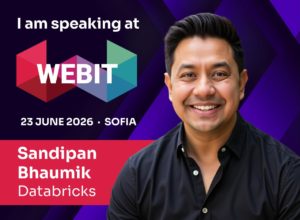
We are delighted to welcome Sandipan Bhaumik, Data & AI Technical...
Most companies are not failing because they lack AI tools.
They are failing because they are not structurally ready for AI.
In his keynote, “The AI-Ready Company,” Sandipan will explore why data architecture, governance, and operational readiness are becoming the real competitive advantage in the AI economy.
The session will focus on the foundations of AI-ready organizations, why many enterprises still struggle with implementation, how data determines AI success, and what separates companies experimenting with AI from companies scaling it successfully.
As organizations invest more in AI than ever before, the real challenge is no longer ambition — it is the infrastructure that ambition sits on: clean data, scalable pipelines, enterprise architecture, and governance that can actually operate at scale.
AI readiness is no longer only a technology question.
It is an organizational survival question.
Join us at Webit 2026 Sofia on 23 June, where global business and technology leaders will gather for an AI Business Dialogue focused on real-world execution, leadership, and transformation.
Welcome to Webit 2026, Sandipan!
Secure your spot at Webit 2026 Sofia:
https://www.webit.org/2026/sofia/tickets.php
#Webit2026 #AI #Databricks
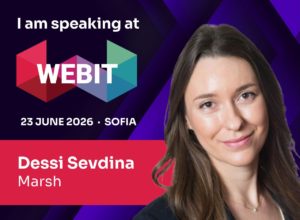
We are delighted to welcome Dessi Sevdina, Managing Director & Head...
AI strategy is no longer owned by innovation teams alone.
It is becoming a board-level business priority.
In her session, “AI Strategy Is No Longer an Innovation Topic,” Dessi will explore how organisations are embedding AI into strategy, operations, governance, risk management, and workforce transformation at scale.
The conversation will focus on organisational readiness, leadership transformation, AI governance, operational risk, and the growing need for enterprise-wide execution models.
As AI reshapes how companies operate, compete, and manage resilience, the winners of the AI era will not necessarily be the most experimental — but the most operationally aligned.
Join us at Webit 2026 Sofia on 23 June, where global business and technology leaders will gather for an AI Business Dialogue focused on real-world execution, leadership, and transformation.
Welcome to Webit 2026, Dessi!
Secure your spot at Webit 2026 Sofia:
https://www.webit.org/2026/sofia/tickets.php
#Webit2026 #AI
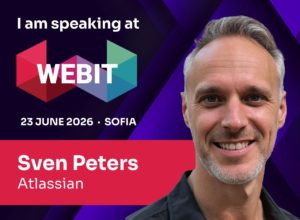
We are delighted to welcome Sven Peters, AI Evangelist at Atlassian,...
AI is moving beyond tools and becoming part of the workforce itself.
In his session, “From AI Tools to AI Teammates: How Organisations Unlock Real Impact,” Sven will explore how organisations are redesigning workflows, teams, and decision-making around AI systems that increasingly operate as collaborators — not just software features.
The conversation will focus on AI-enabled productivity, workflow transformation, human-machine collaboration, and the future operating model of organisations.
This is not about simply adding AI to existing work.
It is about redefining how work itself happens.
Join us at Webit 2026 Sofia on 23 June, where global business and technology leaders will gather for an AI Business Dialogue focused on real-world AI execution, leadership, and transformation.
Welcome to Webit 2026, Sven!
Secure your spot at Webit 2026 Sofia:
https://www.webit.org/2026/sofia/tickets.php
#Webit2026 #AI #Atlassian #FutureOfWork
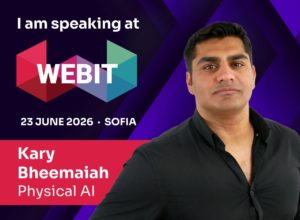
We are delighted to welcome Kary Bheemaiah, Vice President & Chief...
As automation and AI move deeper into the physical world, one question is becoming critical for business leaders: how do you choose the right robot — and avoid costly mistakes?
In his keynote, “How to Buy the Right Robot — And Why Most Companies Keep Getting It Wrong,” Kary will cut through the hype surrounding robotics and autonomous systems to explore the real operational, financial, and strategic challenges enterprises face when deploying physical AI.
Join us at Webit 2026 Sofia on 23 June, where global business and technology leaders will gather for an AI Business Dialogue focused on execution, leadership, and transformation.
Welcome to Webit 2026, Kary!
🎟️ Secure your spot at Webit 2026 Sofia:
https://www.webit.org/2026/sofia/tickets.php
hashtag#Webit2026 hashtag#AI hashtag#Robotics hashtag#Automation hashtag#CapgeminiInvent hashtag#EmergingTechnology hashtag#DigitalTransformation hashtag#Innovation hashtag#Leadership hashtag#Sofia
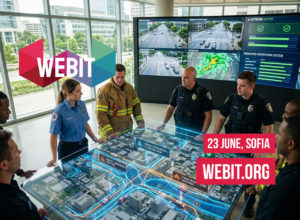
AI and Public Safety: From Reactive Responses to Proactive Protection
The traditional approach to public safety—waiting for a crisis to happen and then scrambling to respond—is rapidly becoming obsolete. Today, emergency services are using AI and connected sensors to protect neighborhoods and save lives with unprecedented speed. Technology is transforming public safety into a highly coordinated, proactive network.
Predicting the Unpredictable The biggest evolution in safety is spotting a hazard before it escalates into an emergency. AI models now analyze real-time weather patterns, soil moisture, and river levels to predict severe urban flooding days in advance. This allows local authorities to safely evacuate vulnerable areas and protect critical infrastructure long before the water arrives.
The New 911 Emergency Response When an accident does occur, smart systems fundamentally change response times. If a connected network detects a severe highway crash or utility failure, it can automatically alert the closest first responders before anyone even dials for help, routing ambulances through the quickest paths and temporarily altering traffic lights to clear the way.
Empowering Human Decision-Makers The ultimate goal of integrating tech into public safety isn't to replace human judgment or build an intimidating surveillance state. It is to give our local heroes—paramedics, firefighters, and police officers—the most accurate information at exactly the right time, ensuring public security remains built entirely on human empowerment.
These questions around AI in Public Safety are central to the global AI dialogue at Webit 2026 Sofia Edition, taking place on June 23, 2026, in Sofia. With more than 3,500 leaders from technology, business, and investment communities, Webit explores how AI is reshaping not just industries - but entire economic structures.
Learn more: https://www.webit.org/2026/sofia/
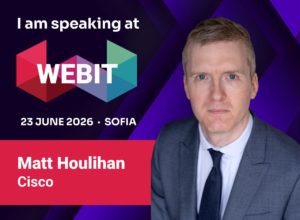
We are delighted to welcome Matthew Houlihan, Vice President, Government Affairs,...
At a time when AI is becoming critical infrastructure for business, government, and society, Matthew will explore how digital systems can be secured, scaled, and made more resilient in the AI era.
Join us at Webit 2026 Sofia on 23 June, where global business and technology leaders will gather for an AI Business Dialogue focused on real-world execution, leadership, and transformation.
Welcome to Webit 2026, Matthew!
🎟️ Secure your spot at Webit 2026 Sofia:
https://www.webit.org/2026/sofia/tickets.php
#Webit2026 #AI #Cisco #DigitalTransformation #Cybersecurity #DigitalResilience #Innovation #Leadership #AIEconomy #Sofia
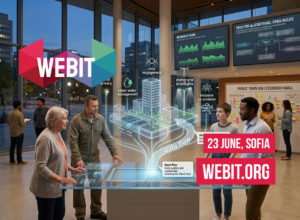
Trust and Resource Management: Breaking the Black Box of Digital Government
Building the smartest energy grids and the fastest online government portals is completely pointless if citizens refuse to engage with them. In the rush to adopt AI and resource management tools to manage public life, municipalities are realizing that their biggest hurdle isn't technical—it's deeply human. Smart cities are prioritizing open communication to build digital ecosystems rooted entirely in trust.
Intelligent Resource Management Smart cities protect vital resources by using intelligent grids and underground sensors to understand their own daily rhythms. Streetlights dim automatically when roads are completely empty to save energy, and smart water systems instantly flag underground pipe leaks, preventing millions of gallons of clean water from being wasted.
Breaking the Black Box For a long time, technology operated in the dark, which is unacceptable when managing public budgets or civic assets. True digital government requires radical transparency. Citizens must know exactly how their data is handled and understand the exact rules an AI system follows when making civic recommendations that affect their daily lives.
Building With the Public A smart city fails the moment it leaves its most vulnerable populations behind. Forward-thinking governments are actively co-creating digital services with their residents through town halls and open feedback loops, ensuring new technology actually solves real human problems rather than just serving as an expensive gimmick.
These questions around AI and Public Trust are central to the global AI dialogue at Webit 2026 Sofia Edition, taking place on June 23, 2026, in Sofia. With more than 3,500 leaders from technology, business, and investment communities, Webit explores how AI is reshaping not just industries - but entire economic structures.
Learn more: https://www.webit.org/2026/sofia/
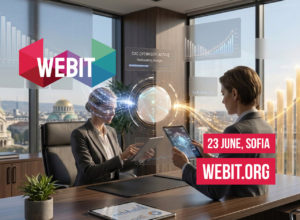
AI-Driven Citizen Services: From Endless Bureaucracy to One-Click Government
The traditional approach to public administration—processing endless paper forms and forcing residents to wait in physical lines—is rapidly becoming obsolete. In today’s digital landscape, forward-thinking municipalities are turning to Artificial Intelligence to rethink the civic experience from the ground up. AI is transforming public service from a slow, defensive bureaucracy into a proactive, user-friendly science.
The Digital Front Door Dealing with isolated municipal departments is a thing of the past. Instead of requiring citizens to visit separate offices for zoning, health, and transit approvals, AI-integrated platforms create a single entry point. One simple application is automatically routed to all necessary departments simultaneously, cutting approval times from months to days and letting people track progress directly from their phones.
The Empathy Upgrade By letting smart algorithms handle repetitive data entry and paperwork, we aren't just saving time—we are freeing up public servants to do what they do best. City staff can finally step away from acting as human rubber stamps to focus on complex community issues, offer face-to-face support for vulnerable groups, and bring real human empathy back into public service.
Proactive Civic Support Modern citizen services go beyond just moving forms online; they anticipate human needs. By analyzing community data trends, AI can automatically notify residents about tax rebates they qualify for, upcoming local road work in their neighborhood, or relevant civic programs, ensuring no one gets left behind in a confusing bureaucratic maze.
These questions around AI in Citizen Services are central to the global AI dialogue at Webit 2026 Sofia Edition, taking place on June 23, 2026, in Sofia. With more than 3,500 leaders from technology, business, and investment communities, Webit explores how AI is reshaping not just industries - but entire economic structures.
Learn more: https://www.webit.org/2026/sofia/
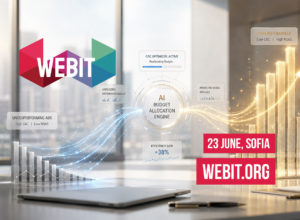
Algorithmic Measurement: Decoding the True ROI of Marketing
"Half the money I spend on advertising is wasted; the trouble is I don't know which half." This famous marketing dilemma is finally being solved by Artificial Intelligence. As customer journeys become increasingly fragmented across dozens of touchpoints, traditional analytics fall short. AI is stepping in to provide a clear, mathematically rigorous lens to measure complex marketing ROI.
Multi-Touch Attribution Perfected Customers rarely buy after seeing a single ad. They might read a blog, click a social post, listen to a podcast, and finally convert via email. AI-powered multi-touch attribution models assign accurate value to every single touchpoint in that journey. This eliminates the bias of "last-click" attribution, revealing which channels actually drive awareness and which drive the final sale.
Predictive ROI and Budget Allocation AI doesn't just measure the past; it predicts the future. By analyzing historical performance and market trends, AI can forecast the expected ROI of future campaigns. Furthermore, it can dynamically reallocate marketing budgets in real-time, shifting spend away from underperforming ads and funneling capital into the channels driving the lowest Customer Acquisition Cost (CAC).
Automating Complex Reporting Data silos are the enemy of agile marketing. AI tools aggregate performance data from CRM systems, ad platforms, and website analytics into unified, real-time dashboards. Generative AI can even write executive summaries of campaign performance, turning millions of data points into actionable, plain-language insights for the C-suite in seconds.
These questions around AI in Measurement are central to the global AI dialogue at Webit 2026 Sofia Edition, taking place on June 23, 2026, in Sofia.
With more than 3,500 leaders from technology, business, and investment communities, Webit explores how AI is reshaping not just industries - but entire economic structures.
Learn more: https://www.webit.org/2026/sofia/