
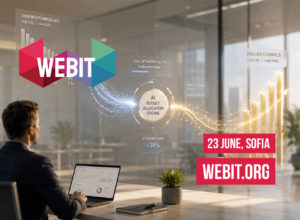
The AI Retention Engine: Predicting and Preventing Customer Churn

Who Will Control the Future of AI — Governments, Big Tech…...
AI is not waiting. Who will build the economies of the next 5 years?
Webit is not a technology conference. It is a window into the new economic system. On 23 June, Webit 2026 will turn Sofia into the stage for one of the most important global conversations about the future of the economy, technology, and leadership in the age of artificial intelligence.
Throughout the day, the programme is structured as a continuous narrative — from geopolitics and state strategy, through infrastructure, regulation, and corporate transformation, to real consumer applications and the industries of the future. Instead of a series of isolated lectures, Webit 2026 paints a complete picture of the AI economy over the next 3–5 years.
The event will bring together in Sofia representatives of global technology companies, financial institutions, regulators, investors, entrepreneurs, city leaders, and governments — turning Bulgaria into a place where the conversation is not simply about the future of AI, but about who will govern it.
The programme opens with the big question: can Bulgaria position itself as Europe's AI hub? At the centre of the opening discussions will be the themes of technological sovereignty, competitiveness, digital infrastructure, and the strategic decisions that states must take today to be leaders tomorrow.
The focus then shifts to the infrastructure of the AI world — security, resilience, and trust. The panels "Securing the AI Era", "Can Regulation Keep Up With General Purpose AI?", and "Confessions of the Department of No" will put on the table the real questions about risk, cybersecurity, regulation, and the governance of AI in a world where technology evolves faster than institutions.
But Webit 2026 will not remain only at the level of vision and policy.
The sessions "The AI-Ready Company", "From AI Tools to AI Teammates", and "AI & Company Strategy" will show how AI is already changing the way companies work, make decisions, build teams, and create competitive advantage.
The afternoon will move on to the real economy of AI — banking, payments, customer experience, commerce, robotics, and healthcare. Topics such as "Rebuilding Banking Around Customer Lifestyles", "Designing a Programmable Future for Commerce & Payments", and "How to Buy the Right Robot" will show how AI is leaving the labs and beginning to rewrite entire industries.
The closing line of the programme is clear: AI is no longer a topic of the future. It is the new infrastructure of the economy, of business, and of states.
Webit 2026 is not a place for people who simply want to hear what is coming.
It is the place for the people who want to be among those who will build it.
Be one of them. Register at webit.org
About Webit
Webit is a global platform for innovation, technology, and entrepreneurship which, for nearly two decades, has been connecting people, ideas, and opportunities from across the world, creating an environment for growth and development.
Learn more: https://www.webit.org/2026/sofia/
Hyper-Personalization: Crafting the AI-Driven Customer Journey

AI-Powered Lead Generation: From Casting Nets to Precision Targeting
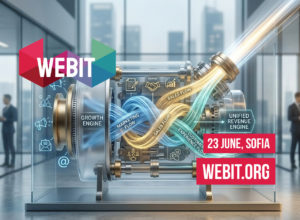
Revenue Systems in the Age of AI
1. AI-Driven Lead Generation
AI is transforming how companies identify and qualify potential customers. Instead of broad targeting, systems now analyze behavioral, demographic, and intent data in real time to prioritize high-value leads.- Predictive lead scoring replaces manual qualification
- AI identifies buying intent signals earlier in the funnel
- Acquisition becomes more precise, reducing wasted spend
2. Hyper-Personalization at Scale
Modern revenue systems are increasingly built on personalization engines powered by AI.- Dynamic content tailored to individual users
- Personalized pricing and offers based on behavior
- Real-time product recommendations across channels
3. AI-Augmented Sales Processes
Sales teams are evolving from manual pipeline management to AI-assisted decision-making.- CRM systems enriched with predictive insights
- Automated follow-ups and outreach sequences
- AI copilots assisting with deal prioritization and messaging
4. Customer Retention as a Predictive System
Retention is becoming increasingly proactive rather than reactive.- AI models predict churn before it happens
- Behavioral signals trigger automated interventions
- Customer success teams act on real-time insights
5. Unified Revenue Intelligence
The biggest transformation is structural: marketing, sales, and customer success are merging into a single AI-powered revenue system.- Shared data models across the entire funnel
- Continuous feedback loops between acquisition and retention
- Real-time optimization of the entire customer journey
Conclusion
AI is fundamentally changing how revenue is generated and optimized. Marketing, sales, and customer experience are no longer isolated functions—they are becoming an integrated, intelligent system designed to continuously maximize growth, efficiency, and customer value. These questions around Revenue Systems in the Age of AI are central to the global AI dialogue at Webit 2026 Sofia Edition, taking place on June 23, 2026, in Sofia. With more than 3,500 leaders from technology, business, and investment communities, Webit explores how AI is reshaping not just industries — but entire economic structures. 👉 Learn more: https://www.webit.org/2026/sofia/
The Productivity Premium: Reality or Bubble?
Where the Gains Are Real
In many sectors, AI is already delivering tangible productivity improvements. Routine and repetitive tasks are increasingly automated, allowing employees to focus on higher-value work. Software development, customer support, marketing, and operations are all seeing faster execution and reduced costs. Smaller teams are now capable of producing results that once required significantly larger organizations. This is particularly visible in startups, where lean teams leverage AI tools to scale quickly without proportional increases in headcount.The Uneven Distribution of Value
However, the productivity premium is not evenly distributed. Companies with access to high-quality data, advanced infrastructure, and strong technical talent are capturing a disproportionate share of the benefits. Large technology players like Microsoft are embedding AI into their ecosystems, amplifying productivity for their users while strengthening their own market position. This creates a widening gap between early adopters and those slower to integrate AI.The Illusion of Productivity
Not all gains are as solid as they appear. In some cases, AI creates the illusion of productivity rather than real economic value. Faster content generation, for example, does not always translate into better outcomes or higher revenue. There is also the challenge of quality control. Many AI systems still require human oversight, which can offset some of the expected efficiency gains. Without careful implementation, businesses risk overestimating the true impact of AI on performance.Rising Costs Behind the Scenes
While AI can reduce labor costs, it introduces new expenses—particularly in compute, data, and infrastructure. As usage scales, these costs can grow rapidly and unpredictably. Companies working with advanced AI systems, including those powered by organizations like OpenAI, must carefully manage the balance between increased output and the cost of generating it. Without this discipline, the productivity premium can quickly erode.A Structural Shift or a Cycle?
The long-term impact of AI on productivity will depend on how deeply it is integrated into business models. If AI becomes a core operational layer, the productivity premium could represent a lasting structural shift in the global economy. However, if adoption outpaces real value creation, the market may correct—revealing that some of the perceived gains were driven more by expectations than by fundamentals.Conclusion
The productivity premium is both real and overstated. AI is undeniably increasing efficiency and enabling new levels of output, but the scale and sustainability of these gains vary widely. The true winners will be those who move beyond experimentation and focus on measurable, economically sound applications of AI. These questions around The Productivity Premiumare central to the global AI dialogue at Webit 2026 Sofia Edition, taking place on June 23, 2026, in Sofia. With more than 3,500 leaders from technology, business, and investment communities, Webit explores how AI is reshaping not just industries — but entire economic structures. 👉 Learn more: https://www.webit.org/2026/sofia/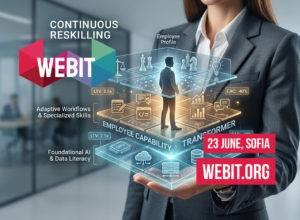
Continuous Reskilling as a Core Business Function
From Training to Strategy
Traditionally, learning and development sat within HR, often treated as a support activity. Today, leading organizations are elevating reskilling to a strategic priority. The ability to continuously adapt workforce capabilities is directly linked to business performance, innovation, and growth.The Speed of Change
AI is accelerating the pace at which roles evolve. New tools, workflows, and expectations are constantly emerging, making static skill sets obsolete. Companies that fail to keep up risk falling behind—not because of lack of talent, but because of outdated capabilities.Embedding Learning into Daily Work
The most effective organizations are integrating learning into everyday workflows. Instead of separate training programs, employees learn while working—using AI-powered tools, real-time feedback, and hands-on problem solving. This creates a culture where learning is continuous, practical, and immediately applicable.Leadership and Accountability
Reskilling is no longer just the responsibility of employees—it requires leadership ownership. Executives and managers must actively support learning initiatives, align them with business goals, and create environments where continuous development is expected and rewarded.Measuring What Matters
As reskilling becomes a core function, companies must rethink how they measure success. Traditional metrics like training hours are no longer sufficient. Instead, the focus shifts to capability development, performance improvement, and the ability to adapt quickly to new challenges.Conclusion
In the age of AI, competitive advantage is increasingly defined by how fast an organization can learn and evolve. Continuous reskilling is not just about keeping up—it is about staying ahead. Companies that embed learning into their core operations will be better positioned to navigate uncertainty and unlock new opportunities in an AI-driven world. These questions around Continuous Reskilling as a Core Business Function are central to the global AI dialogue at Webit 2026 Sofia Edition, taking place on June 23, 2026, in Sofia. With more than 3,500 leaders from technology, business, and investment communities, Webit explores how AI is reshaping not just industries — but entire economic structures. 👉 Learn more: https://www.webit.org/2026/sofia/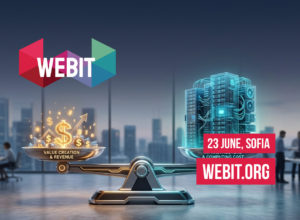
Unit Economics in the Age of AI
Rethinking Cost Structures
AI is transforming the cost base of modern businesses. Instead of scaling through headcount, companies increasingly rely on automation and machine learning systems. This reduces marginal costs and enables non-linear growth. However, new expenses emerge, including model training, data management, and ongoing compute costs. As a result, understanding the balance between efficiency gains and infrastructure spending becomes critical.The Shift in CAC and LTV
Customer Acquisition Cost (CAC) and Lifetime Value (LTV) remain key metrics, but AI is changing how they behave. AI-driven personalization and automation reduce acquisition costs while improving conversion rates. At the same time, better user experiences and predictive insights increase customer retention, driving higher lifetime value. This creates stronger, more scalable business models—if managed correctly.New Metrics for AI-Driven Businesses
AI introduces new performance indicators that complement traditional financial metrics. Measures such as cost per inference, automation rate, and compute efficiency are becoming essential for evaluating profitability. These metrics help businesses understand how effectively AI systems translate into economic value.Monetization in the AI Era
AI is enabling new pricing and revenue models. Usage-based and outcome-based pricing are becoming more common, aligning revenue more closely with value delivered. Companies like Microsoft and OpenAI are leading this shift, demonstrating how AI services can scale through consumption rather than fixed subscriptions.The Productivity Premium
One of the most significant impacts of AI is the productivity premium—the ability to generate more output with fewer resources. Smaller teams can now achieve what previously required large organizations, accelerating innovation and reducing operational friction. However, this advantage is uneven and often favors early adopters with strong data and technology capabilities.Balancing Opportunity and Risk
While AI has the potential to improve unit economics, it also introduces new risks. Compute costs can scale rapidly, competition can intensify, and differentiation becomes harder as AI tools become more accessible. Businesses must carefully manage these dynamics to ensure sustainable growth.Conclusion
AI is not replacing the principles of unit economics—it is elevating them. Companies that successfully integrate AI into their business models will be those that understand how to balance cost efficiency, value creation, and monetization in a rapidly evolving landscape. These questions around Unit Economics in the Age of AI are central to the global AI dialogue at Webit 2026 Sofia Edition, taking place on June 23, 2026, in Sofia. With more than 3,500 leaders from technology, business, and investment communities, Webit explores how AI is reshaping not just industries — but entire economic structures. 👉 Learn more: https://www.webit.org/2026/sofia/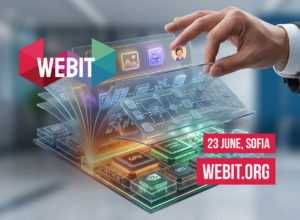
The New AI Investment Cycle: From Hype to Infrastructure
From Hype to Reality: The End of the “Experimentation Era”
In the first wave of modern AI adoption, companies rushed to explore use cases. Investments were often driven by fear of missing out rather than clear business value. This led to:- rapid prototyping of AI tools
- widespread pilot projects
- fragmented adoption across departments
- high expectations, but inconsistent ROI
The Shift Toward AI Infrastructure
The new investment cycle is defined by infrastructure-first thinking. Instead of asking “What can we build with AI?”, companies are now asking: “What foundations do we need to make AI reliable, scalable, and cost-efficient?” This includes investment in:1. Compute and Hardware
The demand for GPUs, specialized chips, and high-performance computing clusters is growing rapidly. AI is becoming compute-intensive at an unprecedented scale.2. Data Infrastructure
High-quality, well-governed, and real-time data pipelines are now a core asset. Without data readiness, AI systems cannot perform reliably.3. Model Operations (MLOps & LLMOps)
Organizations are building structured environments for deploying, monitoring, and updating AI models in production.4. Cloud and Hybrid Architectures
Scalable cloud infrastructure combined with secure on-premise systems is becoming the standard for enterprise AI deployment.The Rise of Enterprise-Grade AI
The next wave of investment is no longer dominated by startups experimenting with AI features. Instead, large enterprises are taking the lead by embedding AI into core operations:- automation of business processes
- AI-driven decision support systems
- predictive analytics at scale
- intelligent customer experience platforms
Investment Is Shifting Down the Stack
One of the most important signals of this new cycle is where capital is flowing. Instead of focusing only on applications, investors are increasingly backing:- infrastructure providers
- cloud and AI platform companies
- data management solutions
- chip manufacturers and compute platforms
- AI security and governance tools
Efficiency Over Experimentation
Another defining trend is the shift from growth-at-all-costs to efficiency-driven AI adoption. Companies are now prioritizing:- cost per inference optimization
- model efficiency and compression
- energy-efficient computing
- ROI-driven AI deployment strategies
The New Competitive Advantage: Infrastructure Maturity
In this new cycle, competitive advantage will not come from simply using AI — but from how well organizations can operationalize it. The winners will be those who can:- scale AI across the enterprise
- integrate it into core systems
- ensure reliability and governance
- optimize cost and performance over time