
Hacking Sofia – Digital capital of the new markets #webitspeakers
It’s less than two months till the date of WEBIT.FESTIVAL 2016 (19-20th of April) and it’s been 8 years since the first Webit event took place in Sofia.
If we have to give you an comparison of WEBIT.FESTIVAL this year and how important it will be for the region, the closest metaphor is that 2016 for us is what the historic landing of Falcon 9 was for SpaceX!
Europe is becoming second-tier player not only to America but India and China and we are confident we can help in getting back in the first row. Because of people such as the founders of Telerik, BitDefender, Chaos Group, Rimac Auto … Sofia and Eastern Europe has a lot to offer and help and it is time to be heard and involved in the digital future of Europe.
The endless work and dedication are making a difference and as our Chairman, Mr. Plamen Russev says “Never give up is not a cliche”. The constant efforts to improve the environment that we live in and to promote business making here have recently gathered us with Betahaus Sofia. So, here we are, creating our own bro-code and collaborating to cement the city as hub of entrepreneurship.
While we are getting ready to press the start on 19th of April, the speakers lineup is being announced, so we have decided to give you closer look at some of them.
You can comment to share your thought and to say Say “Hi” to:
: #1 Brian Collins CMO, AngelHack @LifeofaBrian - place for anyone with an idea
Brian Collins is the Chief Marketing Officer of San Francisco-based AngelHack, the world’s largest and most diverse global hackers and code creators community, who “invent the new and make change happen”.
Back in 2011, their first hackathon event in San Francisco gathered 25 developers. Today AngelHack’s community is over 50,000 in 96 cities worldwide. Their target audience is not just programmers or people who can code—it’s anyone with an idea.
Brian is always traveling to different hackathons interacting with hackers, so we decided to give him an opportunity to meet and network with the geeks in Bulgaria in advance. He will be speaking at WEBIT.FESTIVAL, where you can meet in person and share your ideas.
WEBIT: You say you’re travelling a lot to meet developers around the world. Will it be the first time for you in Bulgaria in April and who would you like to meet with at WEBIT.FESTIVAL?
Brian: This is not just my first time in Bulgaria, but my first time in South East Europe. In my travels last year everyone was telling me about how Bulgaria and CEE in general have been making huge strides in tech over the last few years.
I’d love to meet anyone who’s excited about building out their tech communities. AngelHack works with individuals to help build a foundational tech community in their city and companies to build communities globally.
WEBIT: Is there any difference between hackers from the valley and those from Europe?
Brian:European hackers share a lot in common with our South East Asia hackers. Their projects tend to be very specific to problems they see in their neighborhoods and communities every day. Example: one of our Eastern European winning teams from last year, AppKeep, created an app that automatically collects the manuals of all of your in-home appliances. It can then give you the best repair options should they break down.
Hackers in the Valley tend to be much more focused on larger solutions. Our Silicon Valley team this year, Air Quail, was creating hardware to crowd source air quality metrics down to your street or over a whole continent.
Neither is superior to the other: they’re different ways to focus on problem solving. The key is: does it work? And if so, how can we expand it?
WEBIT: What about Eastern Europe?
Brian: I had a college roommate who was a Bulgarian coder. He was generally quiet, but one of the things I remember the most was when it was time to work on a project he would lock himself into his room for two or three days. He was essentially throwing one man hackathons!
That’s always been my image of Eastern Europe hackers - sometimes quiet but never afraid to get their hands dirty on the tough coding.
WEBIT: AngelHack is hosting a hackathon in Sofia in June. Why and what’s the idea behind it?
Brian: This is our 9th Global Series, but our first time in Bulgaria. Our hackathons are a ton of fun for developers, designers, or entrepreneurs and the winning team gets an invite to our HACKcelerator program. This lets them turn their hackathon idea into a start up reality.
Our theme for the series is Anyone.Can. Code. One of the things we hear over and over again are the incredible stories of how people learned how to code. For some they begin at 3 with basic logic. For others they taught themselves much later in life to make a change. Code has no gender, no age, and no cultural limitations.
Our series is broken into the tech hubs that everyone expects (London, San Francisco, Singapore), and the up and coming communities (Sofia, Lima, Lviv). We work really closely with our ambassadors like Rumen to help create events that bring the community together and help them network and create something amazing.
Betahaus: What are your observations about Bulgaria being part of the global entrepreneurial generation?
Brian: Tech is moving from finding global solutions to everyday problems, to finding localized solutions to neighborhood problems. I’m excited to see Bulgaria entering the entrepreneurial landscape, to see what problems are most important for them to solve.
One of the things at AngelHack we see is that the same problems get tackled over and over again in hackathons. But not all of them are successful. Often it’s the team that has the most common connection to the problem at hand who can attack it in just the right way. A team in New york may tackle an idea, but it’s the team in Kuala Lumpur who actually solves it.
I can’t wait to see what problems Bulgaria is going to solve in the coming years.
WEBIT: Did you know anything about the tech hub of Sofia before being invited to speak here?
Brian: Sadly nothing about Sofia specifically. But I’m excited to learn more while I’m there!
*Applications for Dev Summit access: http://www.webit.bg/dev.php
For more info: Yanita@eacad.eu
Speedinvest: It is all about great founders!
Mobile payments right now are incredibly complicated and figuring out how to do them has been a great challenge. However, once we figured that out the next challenge we are facing is how to persuade consumers to use them. Speedinvest is an early stage venture fund in Vienna. They invest in countries like Turkey, Slovenia, and hopefully soon in Bulgaria.
Investing in FinTech is like a rollercoaster, with disruptions going on in every field, like trading, cryptocurrency, payment and many other fields. It really doesn’t matter which area you will choose, there is room for startups in all of them. This is because big players aren’t able to cope with the development speeds of the technology, they are not flexible enough. There are exceptions to this rule, but startups are generally more able to grasp the new trends in technology and use it to create a new field.
As in every other startup market you need to create traction with your first product, or you will not get too far. FinTech is different, however, from other verticals, because it is a regulated business. When you start one you have to choose to either partner with a licensed institution or get a license yourself. Both of these solutions take time, and getting a license yourself costs a lot of money.
One piece of advice to take away is that investing in teams made up only of experts is not a good idea. It looks very tempting, but those people are typically not very good founders. Really good founders can learn about every field and become an expert in the field in a very short period of time.
The ways Speedinvest deals with the founders it finances is creating bonds with them, not just giving them money. In order to be successful in the field, there has to be mutual trust and respect between founder and investor. The investment is emotional as well as financial.
"In the end, it is all about great founders. No matter what and how much you invest, you need a great founder team in order to succeed" shared on the stage of CEEDS'15 Stefan Klestil - General Partner, SpeedInvest.
Bitcoin influenced the way payments are changing
The area of payments has never been so interesting before. In the recent years, more has happened in the area than ever before. All of this is because of the mobile phones and the Internet. The biggest change in the area has been the change of the ecosystem. With the raise of new big and small players in the mobile industry, the payments area has grown bigger and bigger. Another factor for this progress is the fact that retail and customers are ready to try to use new ways of payment, like contactless payments and some mobile paying systems, like Uber. Bitcoin and other cryptocurrencies have also influenced the way payments are changing.
A big factor for payments is regulation. The regulation coming from Europe has changed everything, leaving companies like Visa on the look for new ways to solve the problems that arise. This, combined with other factors, has led to the creation and spread of digital payments and digital currencies. It has also helped the development of mobile payments and other simpler, smarter and more secure solutions.
We have got to a point where paying with card is not more expensive than paying with cash, and are now seeing how more and more businesses start accepting cards as a way of paying. Technologies like contactless have enabled whole cities like London to run their transport system without the need of cash. Another big thing that has changed is the online check-out experience. We see new mobile wallets coming in, and the security getting better and better. The development in the whole area is driven mainly by the needs of the costumer for better experience better security and ease of use.
An important issue that has to be resolved is payments getting in the way of buying. That happens when, in order to purchase something, the costumer needs to go through a hassle to make the payment. We also need to find a balance between security, collecting data and ease of use. We want to receive as much data as possible from every payment, without exposing any sensible data and without forcing the consumer to use an obstructive technology.
Digital technology has not only changed the commerce value chain, but it has also introduced new parts to it, creating new solutions for the problems we have, but also new problems that need to be solved. Big players like Facebook, can actually have influence over the whole payment system we are seeing. In addition, digital payments make it easier for companies to tailor their offers to each consumer.
"The biggest and most used system for payments of course is Visa. The company has over 500 million cards and 15% of all the money that goes around Europe goes through a Visa card. Bulgaria has one of the lowest usage on Visa in Europe – just one out of every twenty euros is paid via Visa. But how that such a big company react to all the changes that arise? They have changed their whole investment portfolio, betting more on partnerships with new players, and less on long-term investments. Visa is working closely with many banks and big currencies in order to completely eliminate cash as a form of payment, making it easier than ever for everyone to pay for the things they want and get better and better offers", said at CEEDS'15 in April Krassimira Raycheva - Country Lead Bulgaria, Visa Europe.

$400bn cashless transactions per year
"On a global scale we have around $400bn in cashless transactions per year. Even though this area is already huge, it is still growing rapidly. One of the reasons for that is the desire of consumers to pay digitally as it is easier and more secure. Another is the fact that there is still a vast majority of businesses that don’t accept digital payments" said on the stage of CEEDS'15 in April Konstantin Wolff, co-founder of Payleven.The UK for example has 64% of businesses that don’t accept any form of digital payments, even card payments. In France, huge amount of the payments are done by cheque, a technology which is too old for the world we live in. Payleven’s mission is to enable as many SMEs as possible to accept card payments from their customers. There are lots of studies proving that people are ready to spend much more money when buying products and donating with card payments. Having this in mind, it is no surprise that more and more business would want to accept card payments. However, there still isn’t a solution that can cater to their needs. What Payleven does, is offering SMEs the ability to accept card payments with a simple smartphone or tablet in combination with a chip and pin card reader. This replicated the functionality of the traditional card reader. The solution can be used by any SMEs, no matter what area they are in. The problems that need to be solved when looking at SMEs and card payments, can be put in three main categories – operating model, go-to-market and the technology used. The first one is the operating model – if you want to get a traditional card reader you have to wait for 6-8 weeks and sign tons of paperwork. If you use Payleven’s solution this down-time plummets to a single day. Customer support is also a big thing – the company proactively finds problems that may arise, and is prepared to help the businesses. Technology-wise, a lot of the cost of card payments is gone. The cost of the card reader has gone down from 600 to 80 euros, assuming you already have a smartphone or a tablet. Lastly, the payment system is changed. Normally, you sign a contract, forcing you to pay a monthly fee just in order to be live. Payleven has changed that to a pay as you go model, where you only pay for what you use. SMEs can also stop anytime if they don’t like the product. This, however changes the way devices are sold, which led Payleven to the idea to simply sell their card reader at the likes of Metro, where the business owner can just grab it off the shelf, go online, register and become ready to accept card payments. Overall, the company is offering a much more flexible and cheaper solution, that small business can start using today, without signing a contract and paying huge fees every month.
Baybars Altuntas: Before the successful business, you need a good business...
In order to become a successful business entrepreneur, you need a good business idea, and good ideas come to the right side of your brain, the one dealing with dreams and art. However, becoming good at that field, means you should not only have great dreams but also great execution plan. We shouldn’t ask ourselves how to become an entrepreneur, but how to become a successful entrepreneur. In order to be successful, you have to be smart and you have to bring something new to the market. Spending the whole budget only on marketing, without offering anything new to the consumer will not make the consumers go to your business. In order to persuade the consumers to start using your products, you have to give them an incentive in the form of innovation.
If you offer the consumers something new during your marketing campaign you will get them to try your product. This is just the beginning of the journey which will result in you getting all the consumers. The difference between an innovator and an inventor is that the innovator knows how to sell the products they invent. After the global financial crisis, whole governments are sporting innovation not invention. Governments don’t just need intelligent people, they need people who can create new jobs for the population.
It is very important to first innovate and then set up the company. Many people fail because they try to set up a company before having an innovative idea, meaning they are spending their money before they make it.
Once you have your successful product and you know that consumers are ready to pay money for it, you have to start thinking about branding. Every time you sell your product you are also selling your brand. Your brand is marketed through the same campaigns that market your product. If consumers enjoy buying your product and using your brand you have successfully set up a brand.
When you have successfully set up your business and brand you have to make sure that no one can innovate in the product you are making. When you do that competitors will be left with the only choice to buy the franchise rights from you and you become a big product family.
After the last stage, the management stage, you have to choose if you are yourself an employee or the CEO of the company. If you decide to work as an employee of your own company, you will have no time for any other business and ideas. During the leadership stage you have to convert your business into a real one. In order for a business to reach the expected results, it has to be professionally run, which means you will have to hire an external person to act as the CEO of the company, and you yourself can become the chairman of the board.
Once you get to that point, you can pick a startup you like and become their angel investor. That means you use your money, network and know how to invest in the business. In exchange you get a certain percent of the company shares, or part of the revenue.
This and other motivational speech, you can hear if you subscribe for the Webit official YouTube channel HERE.
Lasse Birk Olesen: Bitcoin has gone the way of every new...
Bitcoin has gone the way of every new technology – big players shame it at first, ridicule it, but soon new business, markets and even whole industries emerge in order to commercialize it. Now, according to many of the biggest names, like Bill Gates, Eric Smith and Al Gore have taken a stand for it.
However, when we speak about Bitcoin we have to answer a question: what problems does it solve, and why is it so good? Researchers have tried for decades to find a way to make all the machines on a given network to agree on the state of something, but it wasn’t until 2009 when Bitcoin was introduced, that a practical solution was found. The concept of the blockchain was created. The blockchain is a public journal of every transaction made with Bitcoin, ever since it was found.
"This blockchain is shared between all the machines, so if someone tries to cheat and create fake Bitcoins, everyone on the network can actually see that they have no legitimate history. Using this technology, everyone can send pieces of digital property to one another, without the need of a centralized structure or an expensive middle man," said at CEE Digital Summit Lasse Birk Olesen - Chief Product Officer of Coinify.Among the many problems that Bitcoin solves is reducing transaction fees and pretty much eliminating fraud. According to Golden Sax, card payment transactions cost around 125 billion euro to business every year. In addition to that another 80 billion euro is lost due to card fraud. The reason we have these huge numbers is that payment cards were invented in 1950s and never really changed much in terms of security. This technology was never designed for the Internet. On the other hand we have Bitcoin, which is designed specifically to exist in the era of Internet. There are more and more businesses that accept Bitcoin payments. One of the biggest advantages is the smaller cost of Bitcoin transactions – every transaction costs you 2 euro cents, no matter if you are sending 100 euros or 1 million euros. Bitcoin payments are also easier than card payments – instead of looking for your card and entering tons of numbers when trying to buy something, you just click a button, enter your password and you’re done. By accepting Bitcoin payments you can also get paid from any country in the world, because Bitcoin is global. For example, sending money from Uganda will mean losing around 9% of the money in every transaction. According to researches, 50% of the people don’t have a bank account, meaning they can’t do digital transactions and that their money is in danger. However, Bitcoin will enable these people to send and receive money internationally, and even apply for loans from other countries. Another great use of Bitcoin is crowdfunding. If you use a platform like Kickstarter, you pay around 8% of the raised money to the website, but in return you get a secure platform that guarantees the investors to get their money back if the project is not fully funded. However, you can do the same with Bitcoin, using self-enforcing contracts. A contract can be programmed to do a certain action under certain conditions. For example, if you get a given amount of money for a given time the money would be transferred, otherwise it would be given back to the investors. This is better than using Kickstarter, because it eliminates the middle man and it has much lesser fees. There aren’t many countries that regulate Bitcoin, but some of the ones that do are USA, Germany and Sweden. One factor that eases regulation is the fact that Bitcoin is far from anonymous. In the blockchain every transaction is linked to an account and a name, meaning that every transaction can be easily tracked back to the sender. Coinify has helped on several occasion for the arrests of criminals, using the blockchain. Even though Bitcoin is still volatile, this is a normal trend for any new currency or product and is one that will go away with time. We have seen the volatility of the currency go down and we can be sure it will settle down even further in the coming years. Wanna learn more about the bitcoin and the future of that currency, watch the archive of CEEDS'15 HERE.
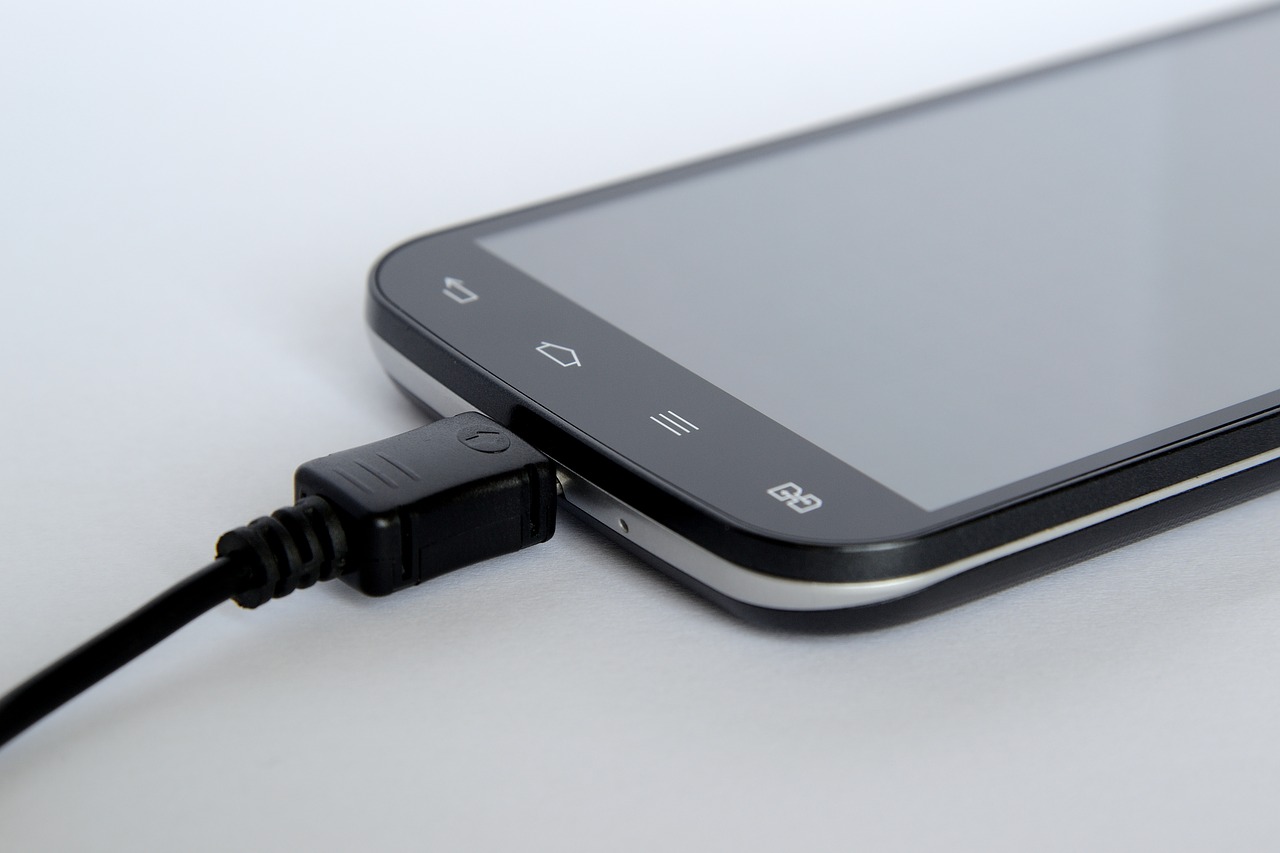
Marcin Hejka: In 10 years devices will operate without a charging
"Intel is not just the largest semiconductor companies in the world, but is also one of the largest technology investors globally", said at CEE Digital Summit by Webit Marcin Hejka, VP & MD EEMEA, Intel Capital.Looking back at how technology evolved to get to the point of IoT, we see that it all started in the 60s with mainframes. It then moved over to client-server architecture, went through web, cloud technology and got to the Internet of Things we are looking at now. The number of connected devices has also increased through the years, starting from several millions mainframes and reaching around 40 billion devices in the next few years. One of the biggest adopters of IoT in the next years, is the energy sector. The number of points where energy is being created is growing significantly. Gathering the right data, processing it and giving it back can enable energy providers to become more and more efficient, eventually getting to a point where we have zero or even negative cost of electricity. The other big area is, of course IT. The introduction of 4G, 5G is also related with millions of new devices and the topology of networks becomes more and more complicated, which can raise a lot of new problems. This can easily be solved with the introduction of self-organized networks, able to solve the problems themselves. We are also seeing devices that can operate up to 10 years without a charging. We are talking about sensors that can be embedded into roads and operate for a decade without charging. The key component of the IoT is the server part, or the cloud. The sensors and devices are becoming cheaper and, as a result, more popular. All the sensors do is gather data constantly. One passenger plane can collect a terabyte of data for the duration of a single flight. However, there is not enough intelligence on the client side to process that. This leads to an immense growth in the cloud sector. Eventually, all the data is ending in the cloud, being processed by big data software. There are already systems which are specialized in analyzing huge databases of unstructured data and extracting intelligence. This intelligence can then be translated directly into useful actions by enterprises. Going forward, IoT will lead us to having intelligence everywhere around us. The systems will be adjusted to us. We are going in the direction of driverless cars, and even beyond that. Actually in many places the limitations are not technological, but legal. For example, in many countries it is illegal to drive a driverless car on public roads. However, you can tell your car to get out of the garage and get in front of your door to make it easier for you to leave your house. Intel has been very active in this space. On top of investment the company is also supplying some devices and technologies that can be used in the sector. These technologies include the super small mother board that can enable the smallest of devices. The company has also introduced a computer platform the size of a button, that can be used in various devices. Intel also produces health trackers, smart watches. Intel has been investing in roughly 100 tech companies every year. Their areas of focus have been changing over time and now consists mainly of datacenter technologies and software, as well as internet, media and education technology. If you've missed to hear Marcin Hejka at CEE Digital Summit by Webit this spring, please watch the video archive of the event in the official Webit YouTube Channel.
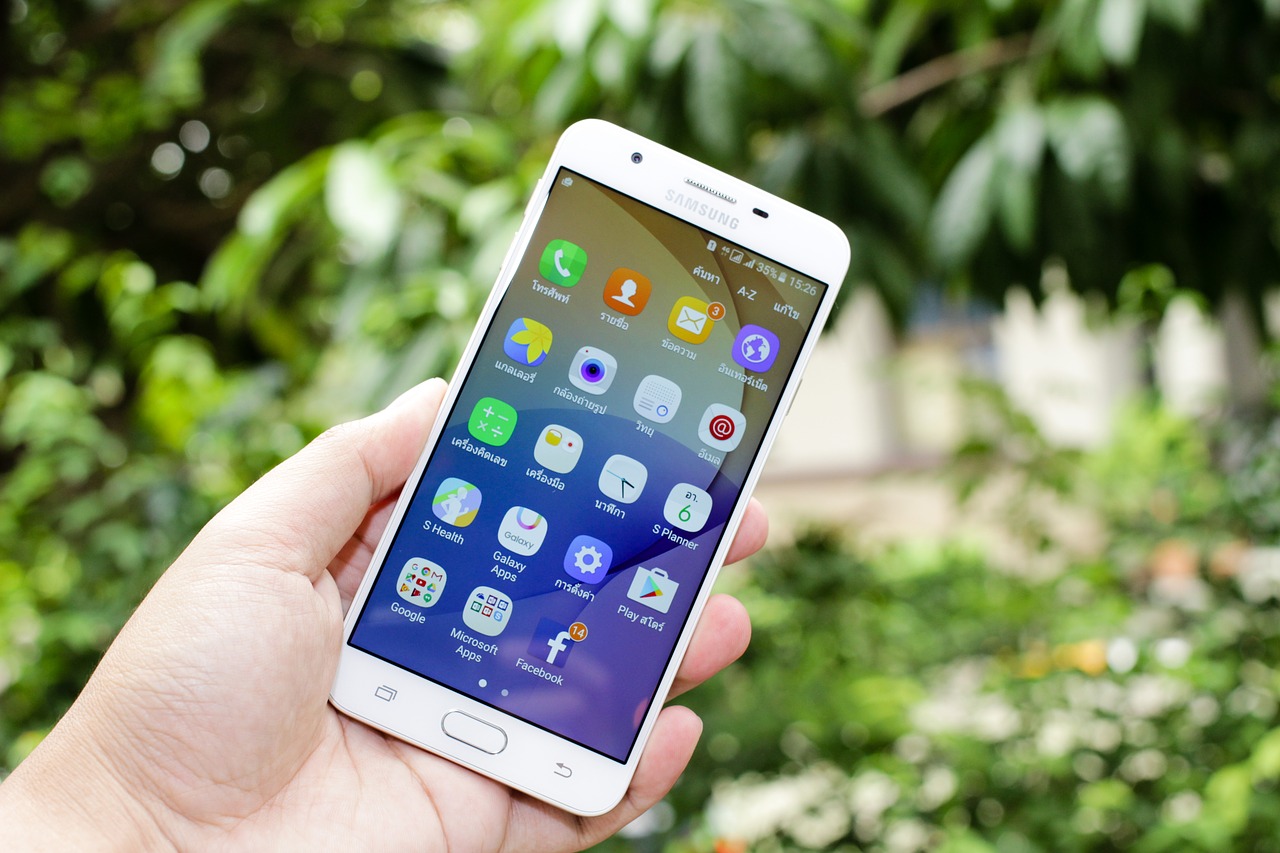
Stylianos Mamagkakis: Forty percent of the people use Samsung devices, but...
Forty percent of the people use Samsung devices, but a hundred percent of the people have some Samsung parts in their device – screen, battery, conductors, etc. Samsung Semiconductors is the second biggest company in the field of components in the world, after Intel, with memory being its biggest product. It is these components that help enable smart devices like phones, cars, etc.
"The three main components that have to be accounted for are computation, storage and displays and each of them has different strong and weak sides, different trade-offs that have to be made. The main goal of the company is to find the right balance between these and make some big decisions based on that", shared at CEE Digital Summit by Webit Stylianos Mamagkakis - Manager Strategic BD, Samsung Semiconductor Europe.Starting with wearables, their main components are a connectivity component, display, computation processor and a security component. All of these need to be very light, small, powerful and efficient. The processors used in smart watches are bio processors, which are very small and can be embedded in the smallest of things, like necklaces for example. Depending on what end-user scenarios we have there are many different ways the manufacturer can go. For example, when it comes to watches, appearance and fashion are the leading forces when it comes to design. the devices also needs to be thin, yet reliable and secure. These needs raise some question when we think about storing data – on one hand we can store the data in a data center, which means that the device needs to stay connected. On the other hand the data can be stored on the device, but in that case the consumer might decide not to share it with anyone, making it harder for manufactures to monitor the devices they sell. Another area where smart technology is needed are connected cars. The car can be looked as a device that collects and displays data in the same time. The backstage of all enabled devices is the cloud. Depending on the scenario we choose, we might want to store and process all our data on the cloud, where we have more security and more processing power. In data centers, as well as devices you have different components that play leading roles, like processor and memory. Having faster CPUs and hard-drive might cost more but will provide a better customer experience. As usual, we need to find the correct balance when we talk about storing and processing data in the cloud. In the recent years, solid state drives have proven to be a much better choice for storing data. New technologies are coming in, like VNAND, that will make storing data even faster and more power-efficient. It is not just important for manufacturers to understand how components work – it is also important that designers understand the limitations and work around them, trying to provide the best user experience with the resources provided. understanding all the trade-offs in respect of size, speed and power-consumption will let companies to make the right choices when it comes to providing the best user experiences. If you'd like to hear the whole speech of Stylianos Mamagkakis - Manager Strategic BD, Samsung Semiconductor Europe, please click HERE.
Bernd Heinrichs: Digitalization is global, it neglects borders
Continuing innovations, connecting devices, machines. Connected people, cars, homes, transport - everything surrounding us is an open system, where you can just plug yourself in anytime you want.
All parking lots have cameras which watch for empty spaces and feed the data to mobile application. This is saving everyone half an hour every day. Pollution has also declined by 30%. Waste management companies only come when the bins are full, as they get real time information.
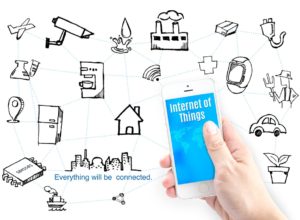
"Digitalization is global, it neglects borders. It generates opportunities, but it can also create some risks. Even though CISCO has 50bn in cash they might disappear from the market completely in just 5 years if they don’t make the right decisions and restructure. Innovation has to be driven everywhere, not just in the Silicon Valley, said Bernd Heinrichs, Managing Director IoT EMEAR Cisco in his speech at CEE Digital Summit by Webit".But first what is the Internet of Things and what is so important about it? The Internet of Things is a system, where everything is connected and everything is constantly feeding data to the cloud – starting from your smartphone and going everywhere else, like toys, microwaves, cars etc. The things themselves are not important, the data they produce is. And with that comes the question that we still haven’t answer – who owns the data? Is it the owner of the machine, is it the manufacturer, or the retailer? We have to make sure that the data doesn’t get in the wrong hands, that it is handled properly and is well secured. With the size of the network constantly growing, security will become a bigger and bigger issue. We currently have around 15bn connected things and this is just 1% of all the things we can connect. When talking about the Internet of Things we certainly can’t have a full discussion without mentioning some of the biggest problems we are facing. Challenges like limited bandwidth, latency and network unreliability have to be solved efficiently before we can move on to implementing the Internet of Things everywhere, in every industry.
Uwa Kubah: From Internet of Things to Internet of People
Uwe Kubach, SAP, gаve a lecture at CEEDS'15 by Webit about the possibilities that Internet of Things gives us, why it is the next logical step after Machine-to-Machine and what challenges lie ahead of us. The main accent of the talk is “what IoT means for enterprise applications?” and it focuses on the impact that IoT has on big businesses and business models.
According to most of the surveys, we are going to have 12-50bn connected devices and 40-50% growth rate on the M2M market by 2020. The prices of communication modules have already declined by 80% and will most probably keep going down in the next decade.
There are several reasons why M2M and IoT have gained speed in the last years, one of them being the much cheaper price of technology nowadays. However, the most important reason probably is the fact that technology has become more mature and reliable. We can now build solutions and application on top of the technology. For example, we know you will have mobile coverage everywhere, which enables us to create solutions that would have been impossible 10 years ago.
Looking at the history of the field we can see how it all started with embedded systems – putting a computer or a piece of hardware inside a physical object, like microwaves or fridges. However, this system has no communication with the outside. The next step is networked embedded systems, where you have multiple piece communicating with each other, but still within the bounds of the physical object (e.g. all the different systems on your car). After that, the logical development was making these whole systems communication with each other. In the beginning it was just M2M (machine-to-machine) where one object can communicate with another one. The final step we have gotten to is the Internet of Things, where every one of those systems can talk to all the rest.
The important differences between M2M and IoT is that in the older model you only have 1-to-1 communication – two systems that are not integrated to work with each other can’t do it without extra programming. This problem is solved in the IoT structure, where all the systems use the same protocols, allowing you to pool all the information in the cloud and then let all the machines access it. There is still the challenge to find the right data models, that are not too specific and not too generic, but it is not unsolvable.
The best thing we get out of the Internet of Things structure is the real-time transparency. You don’t have to work on planning data or estimation anymore, as you can get all the data on demand. For example, you can get the number of cars on a certain road in real time and thus find a better route. This will also allow business to introduce new business models. For example, a company which has been selling compressors can now move to selling cubic meters of compressed air instead. You are not paying for the machine, but for the time you have used it. Having all the answers to questions like “how much has the machine been used for?”, “what is it used for?” and so on, will enable you to provide a much better service and customer support, being able to react to problems as they occur.
If the companies agree to share the information they get to other companies, this can enable us to improve the whole supply chain.
With the information flow coming in real time we can now not just analyse the data retrospectively and make changes according to the results, but we can set triggers that come into play in real time as the data changes. For example we can start an automated task if we see something going wrong with a system or a machine. From there on you can go even further and try to predict when something will go wrong with a machine.
To sum up, Internet of Things will enable us to not only create new business models but also improve existing ones. The access to real time data will change the way we perceive problems and the ways we deal with them. There are several challenges along the way but none of them unsolvable.